
When Should Kids Get Braces in Ridgeland, MS?
Most children start braces between ages 10 and 14, once enough permanent teeth have come in. The first orthodontic check-up should happen much earlier, around age 7, so problems that are easier to guide than to fix later get caught in time.
Those two ages get confused constantly. Age 7 is when someone should look. Ages 10 to 14 is when most kids actually get braces. A minority need something earlier, and this guide explains how to tell which group your child is in.
Why Age 7 for the First Visit?
By about 7, a child usually has a mix of baby and permanent teeth, and the first molars and incisors have come in. That combination lets an orthodontist see how the bite is developing and how the jaws are growing, while there is still time to influence both.
What we are looking for
- Crossbites, where upper teeth close inside the lower teeth
- Severe crowding, or too little room for permanent teeth arriving
- A jaw that is growing forward or backward relative to the other
- Teeth that are missing, extra, or badly out of position
- Habits like prolonged thumb sucking that are shaping the bite
What usually happens at that visit
Nothing, and that is the normal outcome. Most 7-year-olds we see are simply monitored, with a brief check every six to twelve months until the timing is right. Parents sometimes expect a hard sell at these appointments. A good practice will tell you when the answer is “let’s wait and watch,” because for most kids that is the honest answer.
Does My Child Need Early Two-Phase Treatment?
Two-phase treatment means a short first phase during growth, a break while remaining teeth come in, then a second phase with full braces. It is right for a minority of children and it is genuinely valuable for that minority.
| Situation | Typical approach |
|---|---|
| Crossbite or narrow upper jaw | Early phase, often a palatal expander while sutures are still growing |
| Severe crowding, no room for permanent teeth | Early phase to create space and guide eruption |
| Jaw growth discrepancy | Early phase using the growth window |
| Protruding front teeth at high risk of injury | Early phase to reduce risk |
| Mild to moderate crowding only | Wait; treat once with full braces at 10 to 14 |
The reason timing matters is simple: bone responds to guidance while a child is growing, and some corrections are dramatically easier before growth finishes. Once growth is done, the same problems may need extractions or surgery.
What Happens Between Ages 10 and 14?
This is the standard treatment window and the one most families experience. Most permanent teeth are in, growth is still working in our favor, and cases tend to progress well.
The options at that age
- Metal braces. The workhorse. Efficient, durable, and kids get to pick elastic colors at every visit.
- Clear ceramic braces. Tooth-colored brackets, popular with older, more self-conscious kids.
- Clear aligners. Clarity Aligners by Solventum, for suitable cases and kids who will genuinely wear them 20 to 22 hours a day.
Most cases run 12 to 30 months, with adjustment visits every six to ten weeks. Our Ridgeland office at 325 W Jackson St has Thursday hours starting at 7:00 a.m. specifically so families near Bridgewater, Reunion, and Lake Caroline can get in without pulling a child out of a full school day.
What treatment asks of your child
Braces do most of their work unattended, but three things are on the patient: brushing carefully, respecting the food list, and wearing elastics when prescribed. Elastics are where timelines are won or lost, and 12-year-olds need reminding. That is not a character flaw, it is being 12.
What Signs Should Parents Watch For at Home?
You do not need to diagnose anything, but a few things are worth mentioning at your child’s next visit with us or with your dentist.
- Teeth that overlap heavily or a new permanent tooth coming in behind the baby tooth
- Upper teeth closing inside the lower teeth on one side
- A jaw that shifts to one side when your child bites down
- Front teeth that stick out noticeably, which raises the risk of injury in an active kid
- Mouth breathing, or thumb sucking that has continued past age 5 or 6
- Trouble chewing, or biting the cheek regularly
- Baby teeth lost very early or still in place long after their neighbors are gone
None of these are emergencies. They are simply the things that are easier to address while a jaw is still growing.
How Do You Prepare a Child for Their First Visit?
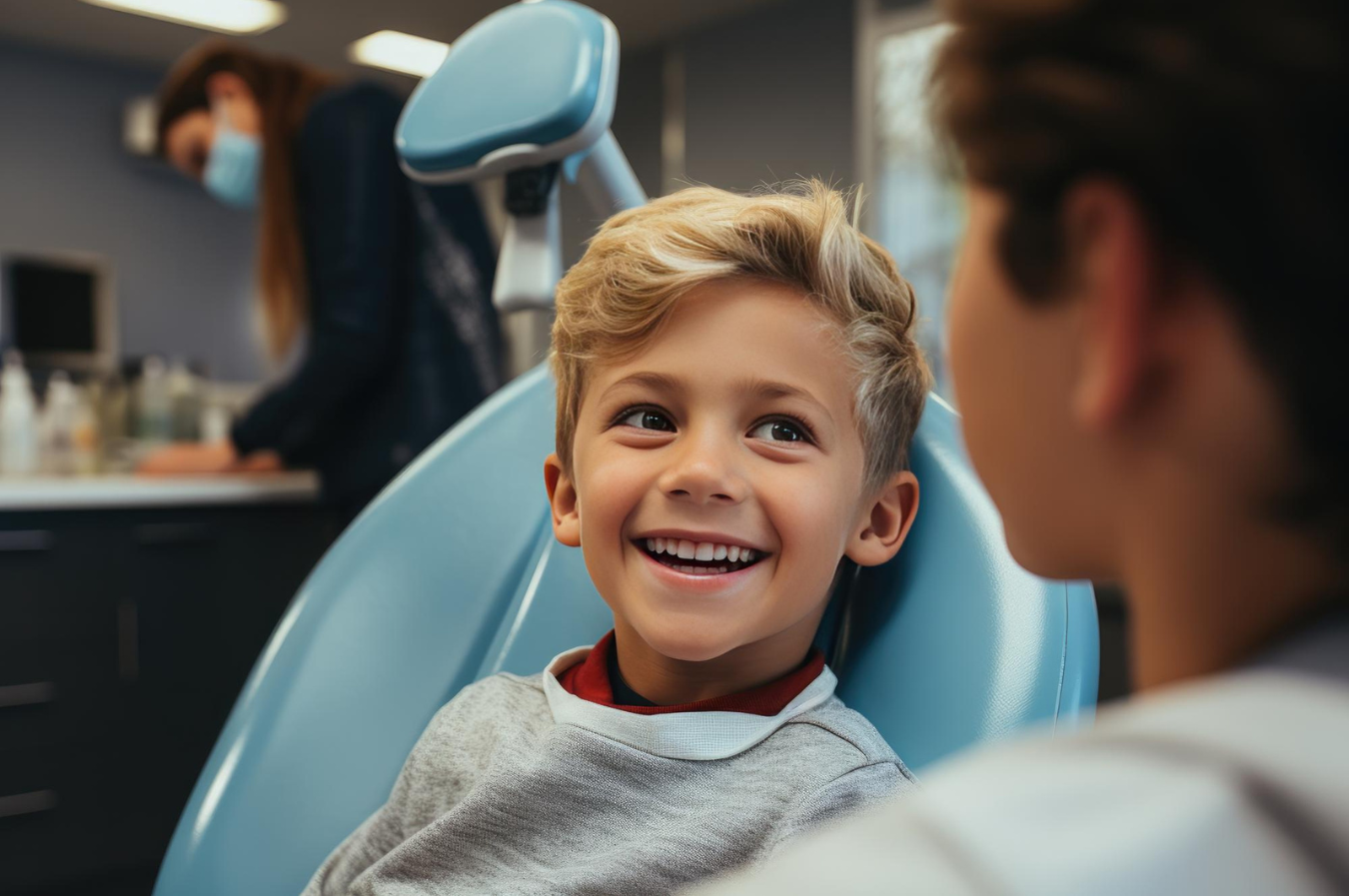
Keep it low key and accurate. The first appointment is a look, some photos, and a scan that feels like a small camera moving around the mouth. There are no shots, no drilling, and nothing that hurts, and telling a child that in plain terms works better than promising it will be fun.
What to bring
Insurance details, any records from a previous orthodontist if you are transferring, and the questions you actually want answered. If your child has questions of their own, let them ask directly; kids follow through better on treatment they understood rather than treatment that was arranged around them.
What Does It Cost, and How Do Families Pay?
Cost depends on complexity and length rather than age. Two-phase treatment costs more overall than a single phase because it is two courses of treatment, which is why it should only be recommended when it clearly earns its place.
At Gamblin Orthodontics the first visit is free, including exam and 3D scan. Financing is in house at 10 percent down, interest free, spread across treatment. We are out of network with commercial insurance and file claims for you so your orthodontic benefits are used, and orthodontic treatment is usually an eligible FSA or HSA expense. Transfer patients are welcome if you move mid-treatment.
Frequently Asked Questions
Can my child get braces with baby teeth still in?
Sometimes, in early treatment cases like crossbites or crowding. In most cases we wait for more permanent teeth so the case can be finished once rather than revisited.
Will braces hurt my child?
The first few days are the sorest, a dull ache rather than sharp pain, and soft foods plus over-the-counter pain relief handle it. After that, adjustment visits usually cause a day of mild soreness at most.
Can they still play sports and instruments?
Yes. Sports need a mouthguard, which we provide guidance on. Wind instrument players adjust within a couple of weeks, and it is worth mentioning at the consult if your child plays competitively.
What if we wait and do nothing at age 7?
For most kids, nothing is lost, because most cases are treated later anyway. The risk is the smaller group with crossbites, jaw discrepancies, or severe crowding, where waiting turns a simple correction into a complicated one. That is exactly what the age 7 check-up is designed to catch.
Does my child need a referral from our dentist?
No. You can schedule an orthodontic evaluation directly, and your dentist and orthodontist can coordinate from there.
Book Your Child’s Free Evaluation
If your child is 7 or older and has never been evaluated, the visit is free and usually ends with reassurance rather than a treatment plan. That is worth an hour of a weekday.
Call (601) 707-5960 or email info@gamblinortho.com to schedule with Dr. Jeff Gamblin at 325 W Jackson St, Ridgeland, MS 39157.