
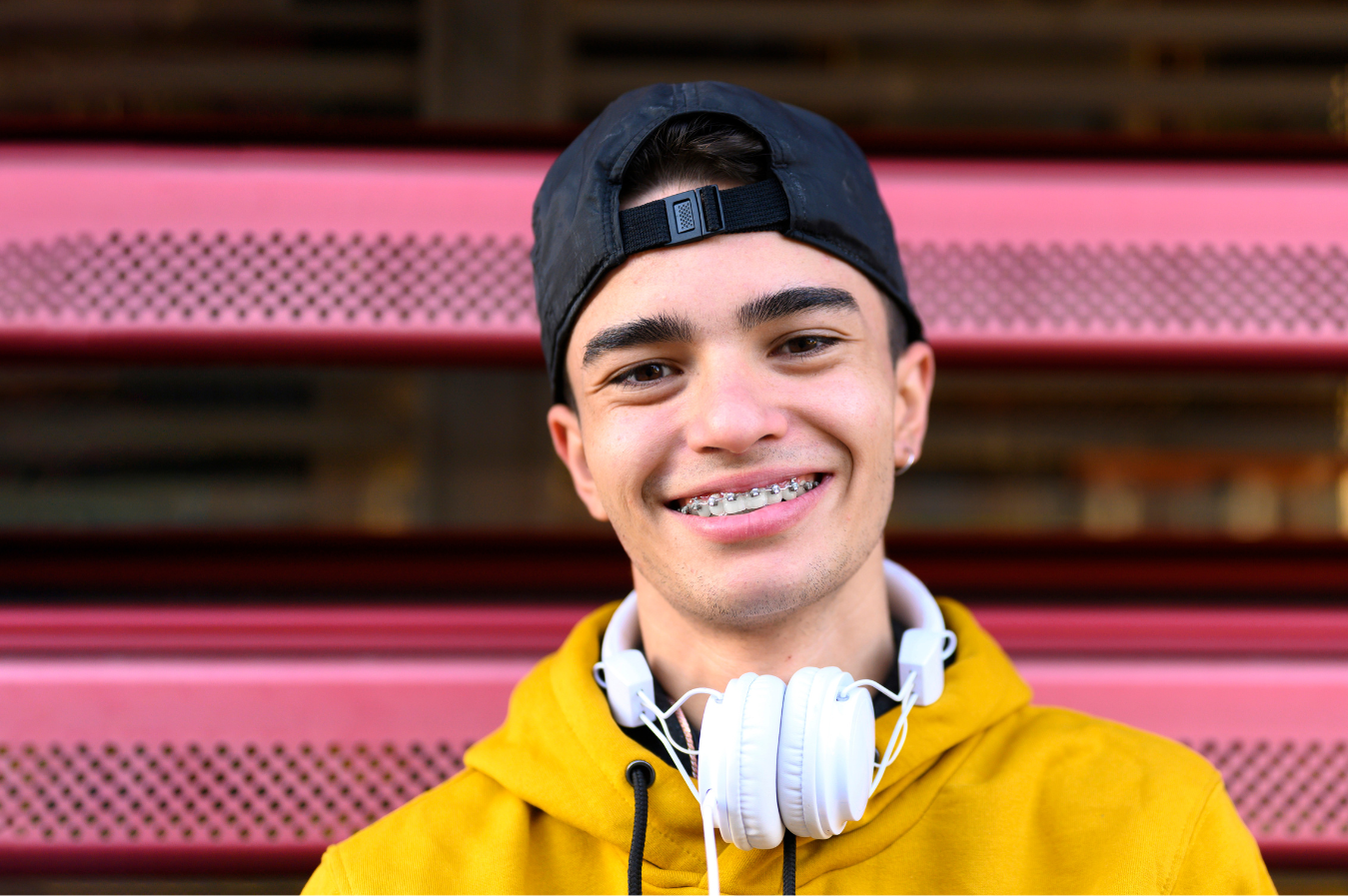
Why Are Braces Easier for Teens Than They Used to Be?
Brackets are smaller and rounded, wires apply lighter continuous force, and adjustment visits are spaced six to ten weeks apart instead of every three or four. Teens report less soreness, fewer emergencies, and less time out of school.
Parents in Copiah County usually compare braces to their own experience in the 1990s. That comparison is unfair to the current version, and the differences show up in the parts teenagers actually care about.
What Makes Modern Teen Braces More Comfortable?
Less hardware in the mouth
Today’s brackets are noticeably smaller with rounded edges, so there is less bulk against the cheeks and lips. Wax is still useful in week one, but the era of a mouth full of metal edges is over.
Lighter force, steadier progress
Nickel-titanium wires flex and then work back toward their shape, delivering a gentle push that keeps working between appointments. The hard-shove-then-nothing pattern of older wires is what made adjustment days memorable for the wrong reasons.
Fewer breakages
Better bonding means fewer brackets popping off, which matters for a family driving in from Wesson or Crystal Springs for an unscheduled repair.
Options that are less visible
Clear ceramic brackets blend with enamel and are a common request from high schoolers. For suitable cases, Clarity Aligners by Solventum are an option, though they depend on 20 to 22 hours of daily wear, which not every teen’s routine supports.
Why Are the Teen Years Efficient for Treatment?
Timing does a lot of the work. By the early teens most permanent teeth have erupted, and growth is often still available to help with bite correction. Treating within that window tends to be more straightforward than treating the same problem at 30.
| Factor | Why it favors teens |
|---|---|
| Most permanent teeth are in | The full case can be planned and finished at once |
| Growth is still available | Bite correction can use jaw growth instead of working around it |
| Bone remodels readily | Teeth respond predictably to steady, light force |
| Habits form easily | Hygiene and elastic routines become automatic quickly |
What still sets the pace
Biology. Most teen cases run 12 to 30 months and no appliance overrides bone remodeling. What genuinely shortens treatment is showing up for adjustments and wearing elastics as prescribed. Elastics are the one place a teenager can add or remove months from their own treatment, and they should hear that directly.
What Does Life With Braces Actually Look Like?
School and sports
An athletic mouthguard handles football, basketball, and baseball. Wind instrument players adapt within a couple of weeks. Nothing here is a reason to postpone treatment, though it is worth mentioning at the consult so we can plan around a season.
Eating
The list of what to avoid is short: ice, hard candy, popcorn kernels, sticky caramel, and biting directly into apples or corn on the cob. Cut it up and it is fine. Most teens adjust in a week.
Hygiene
This is the real work. Brushing after meals and cleaning around brackets prevents the white marks around bracket sites that show up after treatment when hygiene slips. An electric toothbrush and a water flosser make it substantially easier.
Appointments
Every six to ten weeks, and short. Our Hazlehurst office has Thursday hours starting at 7:00 a.m. so a visit does not have to cost a full school day.
What Does Teen Treatment Cost in Hazlehurst?
Cost depends on case complexity and length. For families with commercial insurance we are out of network and file claims on your behalf so orthodontic benefits still apply.
In-house financing is 10 percent down, interest free, spread across treatment, and orthodontic treatment is usually an eligible FSA or HSA expense. The first visit, including the exam and 3D scan, is free, and same day starts are available if you want to begin the same trip.
Frequently Asked Questions
Do braces hurt teenagers?
The first three to five days are the sorest, a dull ache when biting, handled with soft foods and over-the-counter pain relief. Most adjustment visits cause a day of mild soreness or none.
Are clear aligners better for teens than braces?
Better for some, worse for others. Aligners work when a teen wears them 20 to 22 hours a day. Braces work regardless of memory or routine, which is why they remain the more reliable choice for many high schoolers.
Will braces affect playing sports or an instrument?
Sports need a mouthguard and nothing else. Instrument players go through a short adjustment period. Neither is a reason to wait.
What happens if a bracket breaks?
Call the office. Most breaks are not urgent and can be handled at a short repair visit, and we will tell you over the phone whether it needs attention before your next scheduled appointment.
Will my teen need a retainer?
Yes, and it is the part that protects everything else. Teeth drift for life. We take a final scan the day braces come off and make the retainer immediately.
Book a Free Consultation for Your Teen
The exam, the 3D scan, and the numbers all come from one visit, and there is no charge or obligation to start. For treatment details and pricing, see our page on braces for teens in Hazlehurst, MS.
Call (601) 707-5960 or email info@gamblinortho.com to schedule with Dr. Jeff Gamblin at 153 Downing St, Hazlehurst, MS 39083.