
Why Do So Many Ridgeland Patients Choose Clear Aligners?
Three reasons account for nearly all of it: they are hard to notice, they come out for meals and brushing, and there are no brackets to irritate the cheeks. The tradeoff is that they only work while they are being worn.
Aligners went from novelty to mainstream in about fifteen years. At our Ridgeland office they are now one of the most requested options among adults and older teens. Here is an honest look at what earns the popularity and where the enthusiasm outruns the evidence.
What Are Clear Aligners and How Do They Work?
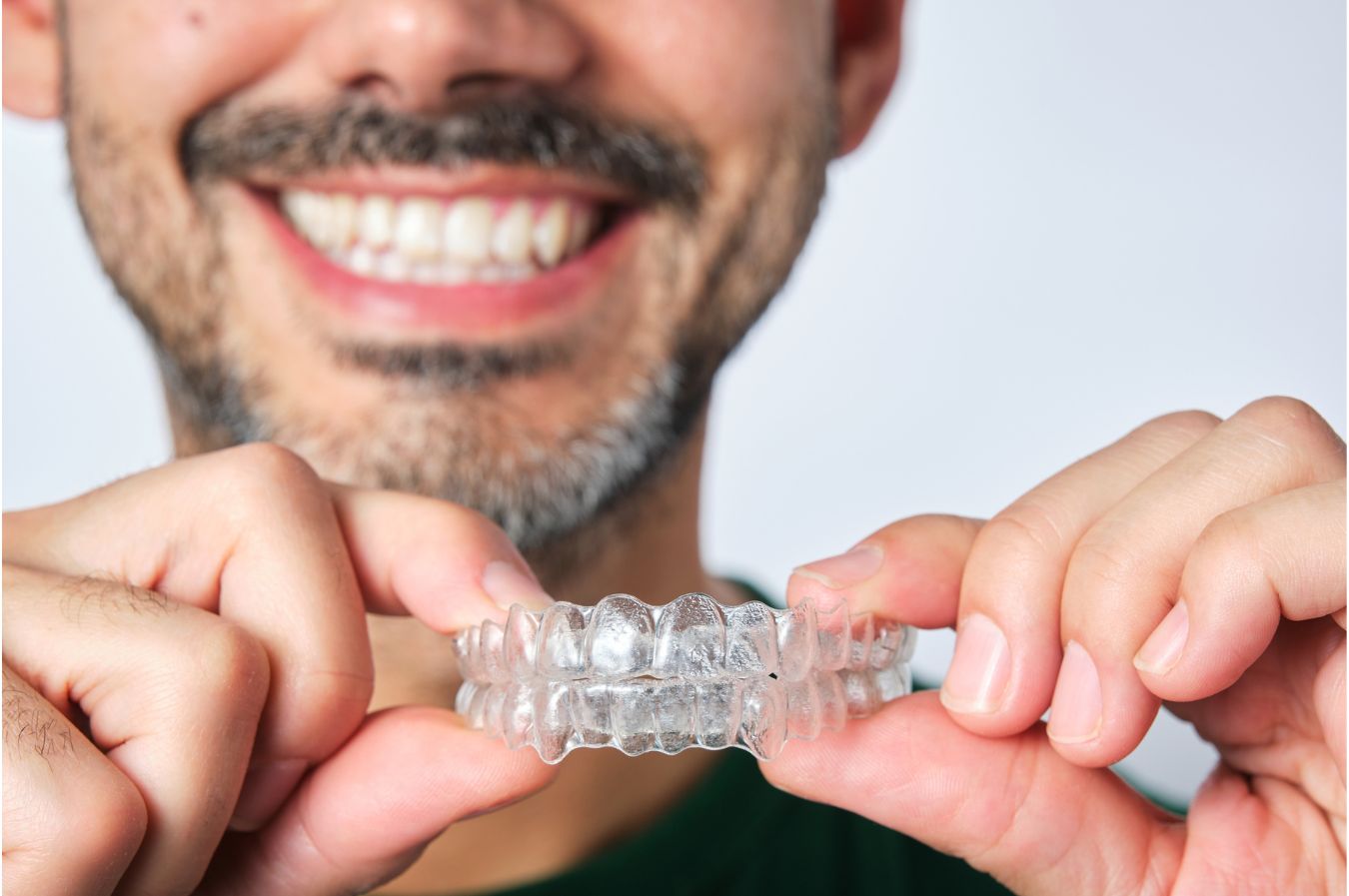
A clear aligner is a thin, custom-made tray that fits over your teeth. Each tray is shaped slightly differently from the last, so wearing them in sequence walks teeth toward a planned position over months.
Gamblin Orthodontics uses Clarity Aligners by Solventum. The workflow starts with a 3D digital scan, no putty impressions, then a treatment plan that sequences every movement, then a series of trays manufactured from that plan. You change trays on a schedule and see us periodically to confirm the teeth are tracking with the plan.
What small attachments do
Most aligner cases use tooth-colored bumps bonded to certain teeth. They give the tray something to grip so it can rotate or push a tooth rather than slide over it. They come off at the end and they are the reason aligners can handle more than they could a decade ago.
What Makes Them Appealing Day to Day?
They are genuinely discreet
This is the headline reason. Across a conference table, most people never notice. For adults in client-facing roles who put off treatment for years, that alone is decisive.
You take them out to eat
No food list. No cutting apples into pieces, no giving up popcorn for two years. You remove the trays, eat what you want, brush, and put them back in.
Cleaning stays simple
Brushing and flossing are unchanged, which matters. Braces make hygiene harder, and patients with a history of decay or gum issues benefit from being able to clean normally throughout treatment.
Fewer emergencies
No brackets to pop off, no wire ends to poke a cheek. If a tray cracks, you move back to the previous one and call us. That is a smaller disruption than a Friday-night bracket break.
| What patients like | What it actually means |
|---|---|
| Nearly invisible | Most people will not notice unless you tell them |
| Removable | Eat and brush normally; also removable for a photo or presentation |
| Comfortable | Pressure, not poking; smooth plastic instead of brackets |
| Fewer emergency visits | No wires or brackets to break |
Who Is a Good Candidate, and Who Is Not?
Aligners fit mild to moderate crowding, spacing, mild bite issues, and relapse in adults who wore braces years ago and stopped using a retainer. They do not fit every case.
Where braces are still the better answer
- Severe crowding requiring significant space creation
- Substantial bite correction, particularly in growing patients
- Teeth needing large rotations or vertical movement
- Younger children whose treatment depends on jaw growth
The compliance question, honestly
Trays have to be worn 20 to 22 hours a day. Patients who wear them consistently finish on schedule. Patients who do not fall behind quietly, because nothing looks wrong until a checkup shows the teeth no longer match the tray. If you already know your routine will not support that, braces are the more forgiving choice, and there is no shame in choosing them.
We will tell you at the consultation which category your case is in. Fitting the appliance to the case is the entire job.
What Does the Treatment Process Look Like?
1. Free first visit. Exam, photos, and a 3D digital scan, with no charge and no obligation to start.
2. Plan and numbers. Whether aligners suit your case, roughly how long it will take, and what it costs per month.
3. Delivery appointment. Attachments are placed, your first trays are fitted, and you learn the wear and change schedule.
4. Progress checks. Periodic short visits to confirm the teeth are tracking with the plan and to hand off the next set of trays.
5. Refinement, if needed. A short additional series to finish details. This is routine rather than a sign something went wrong.
6. Retention. A final scan and a retainer, which is what keeps the result.
Living with trays
The habits that decide an aligner case are small and boring. Put them back in immediately after eating. Rinse them when you take them out so they do not dry with saliva on them. Keep the case in your bag, because trays wrapped in a napkin end up in the trash more often than anyone admits. Brush before reinserting; sealing food against enamel for hours is how cavities start.
Most patients find the routine automatic within two weeks. The ones who struggle usually eat frequently throughout the day, and that is worth flagging at the consult so we can plan realistically instead of optimistically.
What Do Clear Aligners Cost in Ridgeland?
Cost tracks case complexity and treatment length, not the appliance category, and aligner cases at our practice land in a similar range to braces for comparable cases.
Financing is handled in house: 10 percent down, interest free, spread across treatment. We are out of network with commercial plans and file claims on your behalf so your out-of-network orthodontic benefits still apply. Orthodontic treatment is usually an eligible FSA or HSA expense, and the first visit, exam plus 3D scan, is free.
One caution about mail-order aligner companies: no in-person exam, no X-rays, and no supervision if something goes wrong. Tooth movement without a diagnosis is how people end up with a bite problem more expensive than the one they started with.
Frequently Asked Questions
How long does clear aligner treatment take?
Most cases run 12 to 24 months, with simpler cases finishing faster. Wear time is the biggest variable within that range.
Do aligners hurt?
There is pressure and mild tenderness for a day or two after switching to a new tray, and it fades. Most patients describe it as noticeable rather than painful, and there is nothing sharp to irritate the cheeks.
Can I drink coffee with aligners in?
Water only with trays in. Hot drinks can warp the plastic and coffee, tea, and soda will stain it. Take them out, drink, brush or rinse, put them back.
Will I need a retainer after aligners?
Yes, the same as after braces. Teeth drift for life, and retention is what protects the money and months you put in.
Can teenagers use clear aligners?
Many can, particularly older teens who are organized about wear. For teens who lose things or play multiple sports, braces are often the more realistic pick. We are candid about this at the consult.
Find Out if Aligners Fit Your Case
A free visit at our Ridgeland office answers it. You get an exam, a 3D scan, a straight answer about whether aligners can do the job, and the monthly cost either way.
Call (601) 707-5960 or email info@gamblinortho.com to schedule at 325 W Jackson St, Ridgeland, MS 39157.